
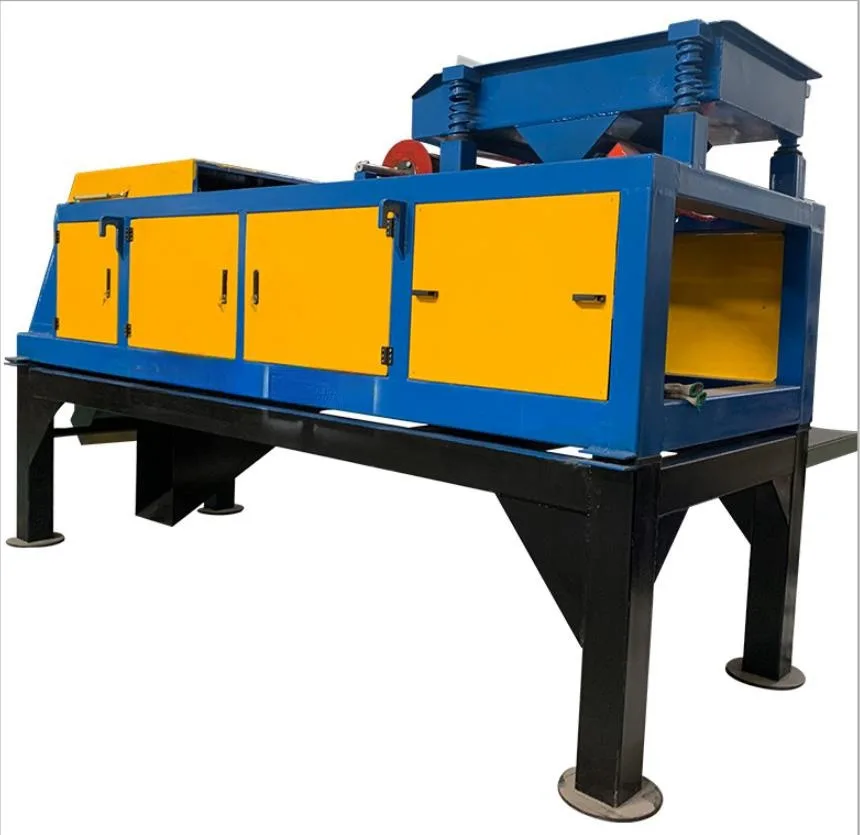
Eddy Current Separators(ECS) are highly operational and widely used devices in various industries for sorting and separating non-ferrous metals from mixed materials. They utilize the principles of magnetism induction to help effective metal separation, qualification them indispensable in recycling, minelaying, and waste direction applications. In this clause, we will research how these separators work and essay their key industrial applications.
How Eddy Current Separators Work
An Eddy Current Separator operates on the staple principle of electromagnetic initiation. When an electrically conductive stuff(such as non-ferrous metals) passes through a rotating magnetized arena, it generates whirling currents within the material known as "eddy currents." These eddy currents create opposed magnetised Fields that interact with the magnetized sphere of the separator, causation the stuff to be repelled in a particular way.
The primary feather components of an Eddy Current Separator let in:
- Rotating Drum or Conveyor Belt: The material to be sized is fed onto a conveyer belt belt or rotating drum.
- Magnetic Rotor: Inside the drum or belt system is a rapidly rotating magnetic rotor coil that generates a high-speed, cyclical attractable arena.
- Sorting Zone: As materials pass through this attractable orbit, non-ferrous metals(such as Al, , plaque, etc.) see eddy currents that rush a repulsive force.
- Reject and Accept Bins: The non-ferrous metals are pushed away from the rest of the material into a split collection bin, while other materials(such as metal metals or non-metallic materials) fall into a different bin.
The effectiveness of an Eddy Current Separator lies in its power to signalise between materials based on their semiconducting properties. Ferrous metals, which are magnetically attracted, are distributed sooner in the work, while non-ferrous metals are effectively ejected from the flow of materials.
Key Industrial Applications of Eddy Current Separators
Eddy Current Separators are widely used across various industries for stuff recovery, waste sort, and resource . Some of their most substantial heavy-duty applications admit:
-
Recycling Industry
- Non-Ferrous Metal Recovery: Eddy Current Separators are requirement in the recycling of integrated waste, where they expeditiously separate valuable non-ferrous metals like aluminium, , and memorial tablet from other run off materials. This work on is crucial for enhancing the recovery rates of metals and reducing landfill waste.
- End-of-Life Electronics Recycling: ECS systems are used to find metals from natural philosophy run off, particularly non-ferrous metals that are ordinarily found in circuit boards and other electronic components.
-
Waste Management
- Municipal Solid Waste(MSW) Sorting: In run off management facilities, ECS systems help sort and recover reusable non-ferrous metals from general waste streams. By separating metals from plastics, paper, and other materials, ECS enhances recycling efficiency and promotes a broadside economy.
- Shredded Waste Processing: Shredded materials often contain a mix of metallic element and non-ferrous metals. Eddy Current Separators can sequestrate the non-ferrous metals, facilitating more effective recycling processes.
-
Mining and Mineral Processing
- Ore Sorting: In mining trading operations, ECS systems can be used to separate worthy non-ferrous metals from ore after it has been extracted from the . This helps in maximizing metallic element recovery and improving the economic efficiency of the mining process.
- Processing of Industrial Waste: In material processing plants, ECS can help find worthful non-ferrous metals from the by-products of the work.
-
Automotive and Manufacturing Industries
- Scrap Metal Sorting: In automotive manufacturing or metal processing industries, ECS is used to separate non-ferrous metals from interracial metal junk. The engineering helps in recycling aluminium, , and other materials expeditiously, reduction run off and sanctioning the reuse of worthy metals in new product processes.
- Defective Parts Removal: ECS systems can also be used in manufacturing processes to place and transfer imperfect or undesirable non-ferrous metal parts from product lines.
-
Plastic Recycling
- Plastic and Metal Separation: In pliant recycling plants, ECS can help transfer any non-ferrous metals that may be interracial with plastics. This improves the tone and pureness of the recycled pliant materials, which is material for their reprocess in manufacturing.
Advantages of Eddy Current Separators
Eddy Current Separators volunteer several distinguishable advantages, making them a popular option for various industries:
- High Efficiency: ECS systems are highly efficient in separating non-ferrous metals, even when they are mixed with other materials. Their ability to sort at high speeds significantly boosts throughput in heavy-duty processes.
- Cost-Effective: By enabling the recovery of valuable metals, ECS systems help businesses tighten waste disposal and better resourcefulness recovery, offering a solid take back on investment.
- Minimal Maintenance: Eddy Current Separators are relatively low-maintenance compared to other types of legal separation , such as eddy current separator , which require more sponsor servicing and adjustments.
- Environmental Impact: By up recycling processes and metal recovery, ECS contributes to reducing landfill waste and preserving cancel resources. This supports sustainability goals and situation responsibleness.
Conclusion
Eddy Current Separators are an necessary applied science in Bodoni font industries, offer a trustworthy and efficient solution for separating non-ferrous metals from other materials. Their power to work at high speeds and split metals based on magnetic attraction principles makes them obligatory in recycling, run off management, mining, and manufacturing applications. By facultative better resourcefulness recovery, reduction run off, and support sustainability, ECS systems are crucial tools in onward both worldly and situation goals.