
The evolution of well control technology represents one of the most significant advancements in petroleum drilling safety and efficiency over recent decades. A comprehensive examination of conventional versus automated well control systems reveals important differences in operational philosophy, technical implementation, and performance outcomes that influence decision-making for drilling operations worldwide. This comparative analysis explores the fundamental characteristics of both approaches, their respective advantages and limitations, and considerations for implementation in different operational contexts and regulatory environments.
Conventional well control systems have formed the foundation of drilling safety for generations, relying on human operators to monitor parameters, interpret conditions, and execute control actions based on established procedures and personal experience. These systems typically incorporate manual or hydraulic controls for blowout preventer operation, choke manifold adjustment, and pressure management during well control events. The operational philosophy emphasizes human judgment and procedural compliance, with success depending heavily on operator training, situational awareness, and decision-making capability under stressful conditions. While conventional systems have proven effective when properly operated, they introduce variability based on human factors that can affect response consistency and reliability.
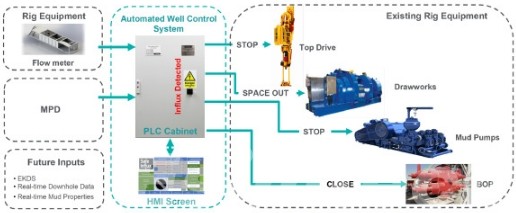
Automated System Architecture
Automated well control systems represent a technological evolution that incorporates advanced sensors, computational algorithms, and electromechanical actuators to monitor conditions and execute control actions with minimal human intervention. These systems continuously analyze multiple data streams including pressure measurements, flow rates, fluid properties, and equipment status to detect anomalies and initiate appropriate responses according to pre-programmed logic sequences. The automated approach aims to reduce response time, eliminate human error, and ensure consistent execution of control procedures regardless of operator experience level or situational stress factors. Implementation typically involves integration with existing drilling control systems, requiring careful interface design and validation testing to ensure reliable performance under various operational scenarios.
Performance Comparison Metrics
Evaluating the relative performance of conventional versus automated well control systems involves multiple dimensions that organizations should consider when making implementation decisions. Response time represents a critical metric, with automated systems typically demonstrating faster reaction to detected anomalies due to elimination of human processing delays. Consistency of execution provides another important comparison point, as automated systems perform identical actions for identical conditions while human operators may introduce variability based on experience, fatigue, or situational interpretation. Training requirements differ significantly between approaches, with conventional systems demanding extensive operator education and recurrent competency assessment while automated systems require different skill sets focused on system monitoring, maintenance, and override procedures when necessary.
The table below summarizes key comparative factors between conventional and automated approaches:
| Comparison Factor | Conventional Systems | Automated Systems |
|---|---|---|
| Primary Control Mechanism | Human operator decision and action | Algorithmic analysis and automated response |
| Response Time | Variable (seconds to minutes) | Consistent (milliseconds to seconds) |
| Training Requirements | Extensive operator training and certification | System monitoring and maintenance training |
| Implementation Cost | Lower initial investment | Higher initial investment |
| Operational Flexibility | High adaptability to unusual situations | Limited to pre-programmed scenarios |
| Maintenance Complexity | Standard mechanical/hydraulic maintenance | Advanced electronic and software maintenance |
| Regulatory Acceptance | Well-established certification processes | Evolving regulatory frameworks |
| Human Factor Considerations | Relies on operator competence and alertness | Reduces but requires monitoring competence |
One particularly complex consideration involves the integration of human oversight within automated system architectures. While automation aims to reduce human intervention in routine control functions, effective system design maintains appropriate levels of human monitoring and override capability. This balanced approach recognizes that automated systems may encounter unanticipated conditions or develop faults that require human judgment and intervention. Designing effective human-machine interfaces that provide clear situational awareness without overwhelming operators with unnecessary information represents an important challenge in automated system implementation. Training programs must address both normal automated operation and emergency manual intervention procedures to ensure personnel remain competent across all potential operational modes.
Implementation considerations for organizations evaluating well control system upgrades involve multiple technical, operational, and economic factors. Technical compatibility with existing drilling equipment and control systems requires careful assessment to ensure seamless integration and reliable performance. Operational workflow adjustments may be necessary to accommodate different monitoring requirements and response procedures associated with automated systems. Economic analysis should consider not only initial investment costs but also long-term operational savings through reduced non-productive time, lower training expenses, and improved safety performance. Regulatory compliance verification represents another important consideration, particularly for automated systems where certification processes may still be evolving in some jurisdictions.
Looking toward future developments, the evolution of well control technology appears likely to continue toward greater automation while maintaining essential human oversight capabilities. Advances in sensor technology, data analytics, and machine learning algorithms promise to enhance automated system performance and reliability. Integration with broader digital drilling platforms will create more comprehensive control ecosystems that optimize multiple aspects of drilling operations simultaneously. Standardization efforts across industry and regulatory bodies will help establish consistent implementation frameworks and certification processes for automated systems. These developments, combined with growing industry experience and technological maturity, suggest that automated well control systems will play an increasingly significant role in shaping drilling safety and efficiency in the coming years.
As the petroleum industry continues to operate in increasingly challenging environments with heightened safety expectations and economic pressures, the choice between conventional and automated well control approaches represents an important strategic decision. Both systems offer distinct advantages that may suit different operational contexts, regulatory environments, and organizational capabilities. Careful evaluation of specific requirements, thorough implementation planning, and comprehensive training programs remain essential regardless of technological approach selected. With proper consideration of these factors, drilling organizations can implement well control systems that enhance safety, improve efficiency, and support sustainable operations across diverse global markets and operational conditions.