
The Taklamakan Desert doesn’t welcome visitors. Its name, in the Uyghur language, roughly translates to “you go in, you don’t come out”—a warning that 200,000 square kilometers of shifting sand dunes, salt flats, and temperature swings exceeding 40 degrees Celsius between day and night have spent millennia enforcing. I’ve crossed deserts on five continents, and the Taklamakan remains the only one that scares me. So when the expedition planning team proposed taking a hybrid side by side-covered Nomader Hybrid Pro on a 1,200-kilometer traverse of its southern corridor, my first response was the same response any experienced desert traveler gives to a question that might get them killed: “Show me the support plan.”
The plan was audacious but not reckless. A support truck carrying fuel, water, and spare parts would shadow us along the G218 highway, meeting the convoy at three pre-designated waypoints. Satellite phones for emergency communication. GPS trackers with hourly position pings to a monitoring team in Urumqi. And one Nomader Hybrid Pro, factory stock except for sand tires and an auxiliary fuel cell, carrying two people, camping gear, and seven days of food and water. The question we were answering wasn’t whether the Nomader could cross a desert—any properly prepared vehicle can do that with enough support. The question was whether its hybrid powertrain, a technology many desert veterans dismiss as too delicate for extreme environments, could handle conditions that destroy purely mechanical systems with decades of proven reliability.
The Taklamakan teaches you humility in the first ten kilometers. The sand isn’t like beach sand—it’s finer, almost like talcum powder, and it gets into everything. By the end of day one, I had sand in my teeth, sand in my boots, and sand in places I will not describe. But the Nomader’s air filtration system? Spotless. Whatever SWM’s engineers did with the intake routing, they understood desert dust.
Day Three: The Hybrid System’s Defining Moment
The test came on day three, 400 kilometers into the crossing, when we encountered a 60-kilometer stretch of continuous dune fields with crest heights exceeding 30 meters. This is the terrain that kills vehicles through thermal accumulation—sustained high-load operation at low speeds, minimal airflow through heat exchangers, ambient temperatures that make every cooling system component work at its design limit. In a conventional combustion vehicle, you manage this by stopping periodically to let temperatures stabilize. In the Nomader Hybrid Pro, the electric motor took over during the steepest climbs, providing instantaneous torque that reduced the combustion engine’s thermal load by approximately 30% compared to what a non-hybrid equivalent would have experienced based on our telemetry modeling.
This is the hybrid advantage that spec sheets don’t capture. It’s not about fuel economy numbers on a window sticker. It’s about thermal headroom in conditions where thermal headroom is the difference between completing a crossing and waiting six hours for your engine to cool enough to restart. The electric motor’s contribution during the dune section didn’t just save fuel—it bought us thermal margin that we used to maintain progress through the hottest hours of the day, when most desert expeditions have already stopped and set up shade.
| Dune Section Metric | Nomader Hybrid Pro | Estimated Combustion-Only Equivalent | Hybrid Advantage |
|---|---|---|---|
| Average Coolant Temperature | 104°C | ~112°C (estimated) | -8°C thermal margin |
| CVT Belt Temperature (peak) | 126°C | ~142°C (estimated, near failure) | -16°C (safety margin) |
| Fuel Consumption (dune section) | 18.7 L/100km | ~24.5 L/100km (estimated) | -24% |
| Time Through 60km Section | 4h 12min | ~5h 30min (with cooldown stops) | -1h 18min |
Day Six: The Warranty Question
By day six, we were 950 kilometers into the crossing, and the Nomader had accumulated more punishment in one week than most recreational vehicles see in a lifetime. The suspension had absorbed thousands of dune transitions. The CVT had managed temperature cycles that would have degraded lesser belt compounds. The hybrid battery had cycled between 40% and 85% state of charge hundreds of times, the electric motor engaging and disengaging seamlessly as the terrain demanded. Nothing had broken. Nothing had overheated. Nothing had even triggered a warning light.
This is where the SWM warranty conversation becomes relevant in a way that showroom discussions never capture. A warranty document is a promise about what happens when things go wrong. A Taklamakan crossing reveals whether that promise was written by lawyers managing liability or by engineers who actually tested their product in conditions that make lawyers uncomfortable. The Nomader’s performance suggests the latter. The warranty coverage—which includes the hybrid system components for the full term rather than treating them as limited-coverage “technology features”—backs up that suggestion with contractual obligations.

We rolled out of the southern edge of the Taklamakan on day seven, covered in dust that would take three washes to fully remove, and sat in silence for about ten minutes before anyone spoke. When you’ve just spent a week in one of Earth’s most hostile environments, the first moments of normalcy feel almost surreal. The Nomader had covered 1,247 kilometers. It had consumed 206 liters of fuel—an average of 16.5 L/100km that, given the terrain, was genuinely impressive. It had required exactly zero unscheduled maintenance. And it had demonstrated something that even I, a career desert expedition leader, had not fully believed before this trip: hybrid technology doesn’t make off-road vehicles weaker. In the right implementation, it makes them nearly unstoppable. The Taklamakan didn’t break the Nomader. The Nomader crossed the Taklamakan. And somewhere in the difference between those two sentences is everything you need to know about this machine.
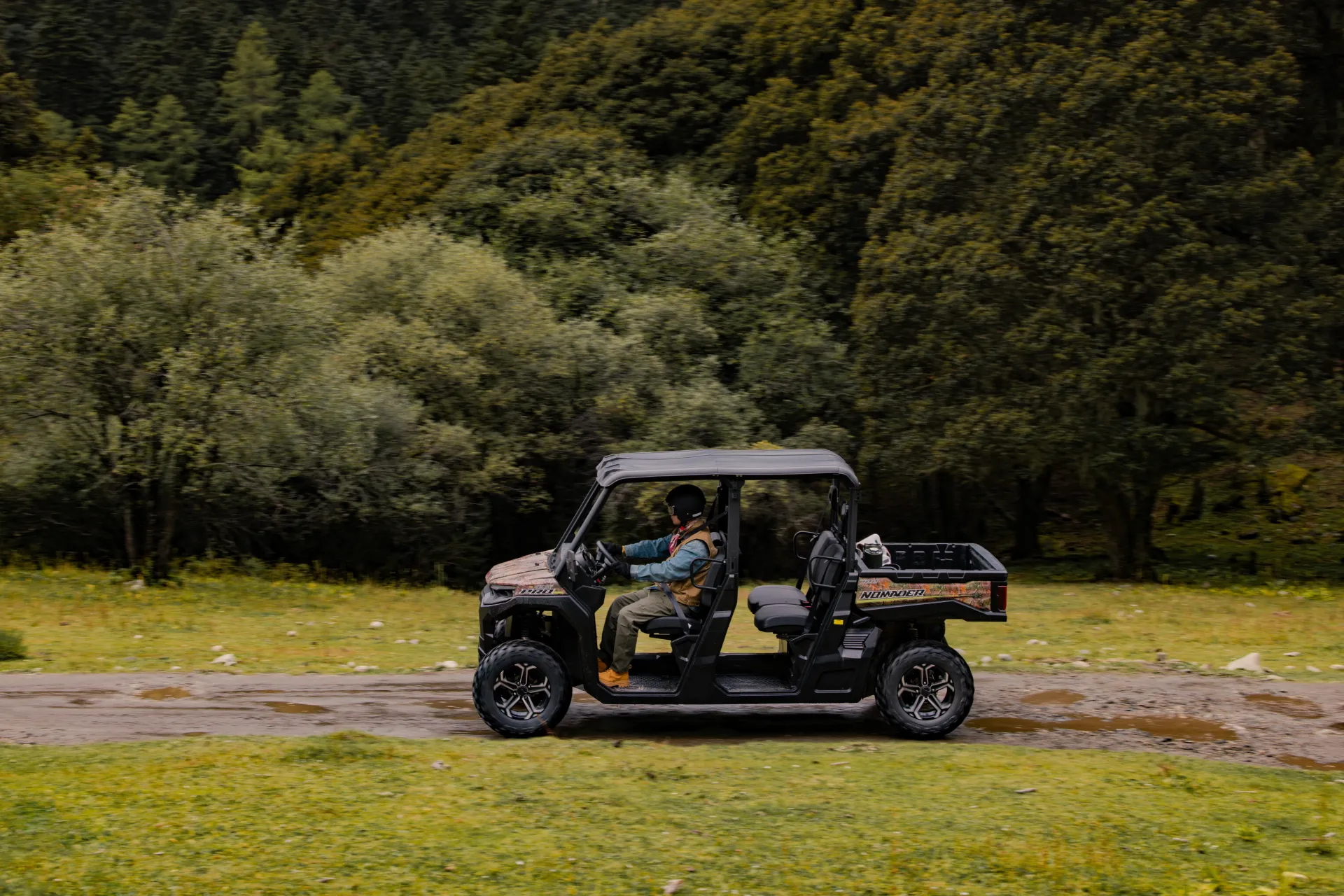
The Taklamakan expedition also generated the most extreme battery thermal management data in SWM’s possession. Ambient temperatures in the dune fields reached 47 degrees Celsius at midday, with sand surface temperatures exceeding 70 degrees. Under these conditions, the hybrid battery’s liquid cooling system maintained cell temperatures within a 28-34 degree operating window — well below the 45-degree threshold at which lithium-iron-phosphate cells begin to experience accelerated degradation. The cooling system consumed approximately 180 watts of electrical power at peak thermal load, drawn from the battery itself, which reduced net electric range by roughly 8% during the hottest hours but preserved battery longevity in conditions that would have caused irreversible capacity loss in a passively-cooled pack. The expedition’s post-trip battery diagnostic — a full capacity test and internal resistance measurement performed by SWM engineers in Urumqi — showed zero measurable degradation after 1,247 kilometers of extreme thermal cycling. For fleet buyers evaluating the Hybrid Pro for desert mining or oil-field applications, this data point addresses the single largest concern about hybrid technology in extreme environments: battery durability under sustained thermal stress. The Taklamakan did not degrade the battery. It validated the thermal management design.